

Outbreak — Rapid UX Pivot for Emergency COVID-19 Testing
Project Overview
Role: Senior UX/UI Designer
Timeline: 6 Weeks (March – May 2020)
Context: Avera Institute for Human Genetics
The Context & The Pivot
In early 2020, our team was deeply engaged in developing a comprehensive Laboratory Information Management System (LIMS) for Avera. When the COVID-19 pandemic hit, laboratory priorities shifted overnight. Avera needed an immediate, robust digital infrastructure to support a massive influx of SARS-CoV-2 testing.
Demonstrating extreme agility, we paused the core LIMS development to pivot our architecture and create «Outbreak»—a dedicated emergency response module. With a tight 6-week deadline, the goal was to design an interface that could seamlessly handle high-volume viral PCR plating, sample extraction, and data review without disrupting the lab’s critical operations.
This emergency response module was built upon the foundational architecture developed for the Avera Genetics LIMS. For a deep dive into the core design system, user personas, and complex workflow mapping that made this rapid pivot possible, [Read the full Avera Genetics LIMS Case Study].
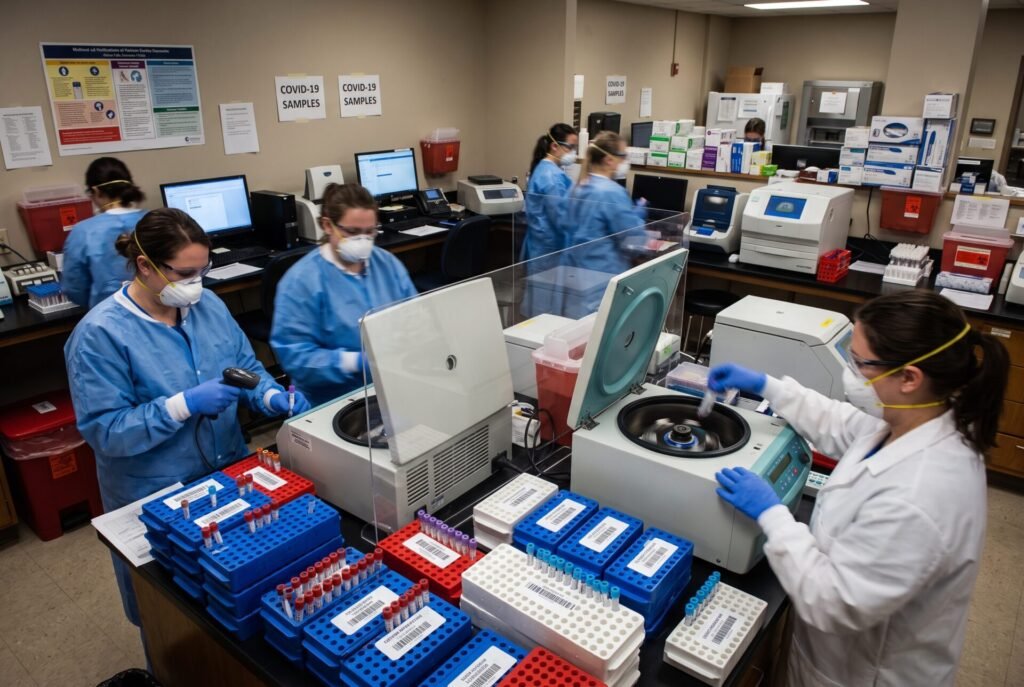
AI-generated conceptual illustration simulating the high-stress, physical environment of a COVID-19 testing lab. Created to visualize technician ergonomics and PPE constraints without disclosing confidential facilities.
Design Strategy: Zero Learning Curve & Function Over Form
In a high-stakes, high-stress laboratory environment, technicians processing infectious samples cannot afford a learning curve.
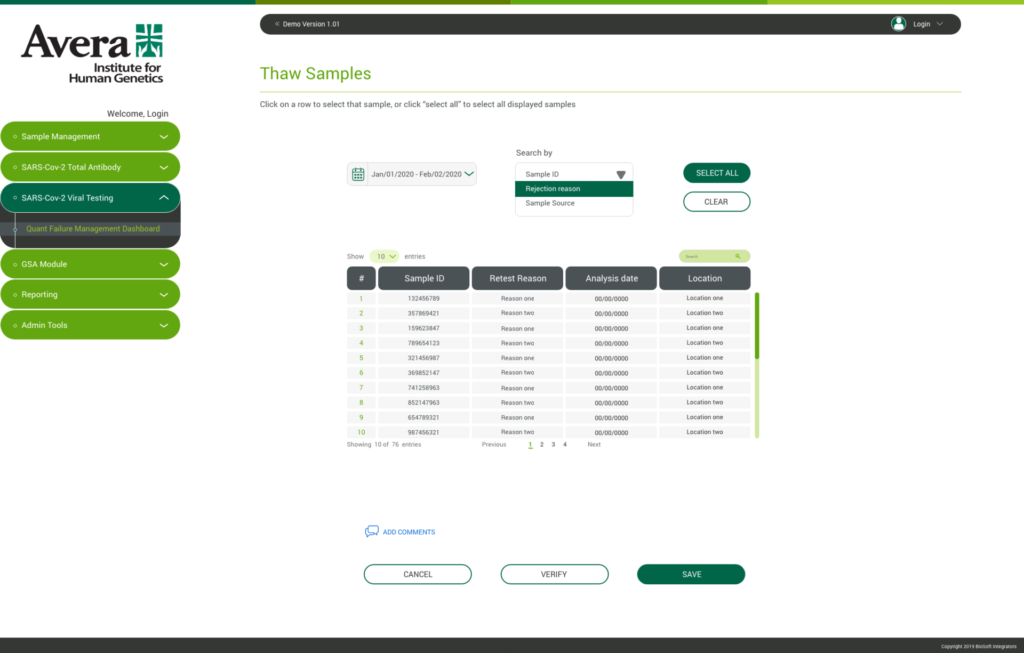
Instead of building a new aesthetic from scratch, I intentionally leveraged the existing LIMS Design System. By reusing established UI patterns, typography, and layout rules (visible in tasks like Thaw Samples), lab technicians interacted with a familiar environment.
For high-speed tasks like Prepare HSC Controls, I prioritized «Function over Form.» The UI was stripped of unnecessary visual embellishments, focusing entirely on massive, undeniable Call-to-Actions (CTAs) and hyper-visible scanning fields. The design was austere by necessity, ensuring cognitive load remained minimal so users could focus on physical accuracy.
Defensive Design & Hardware Integration (Error Prevention)
During an outbreak, error recovery is too late; the system must guarantee error prevention.
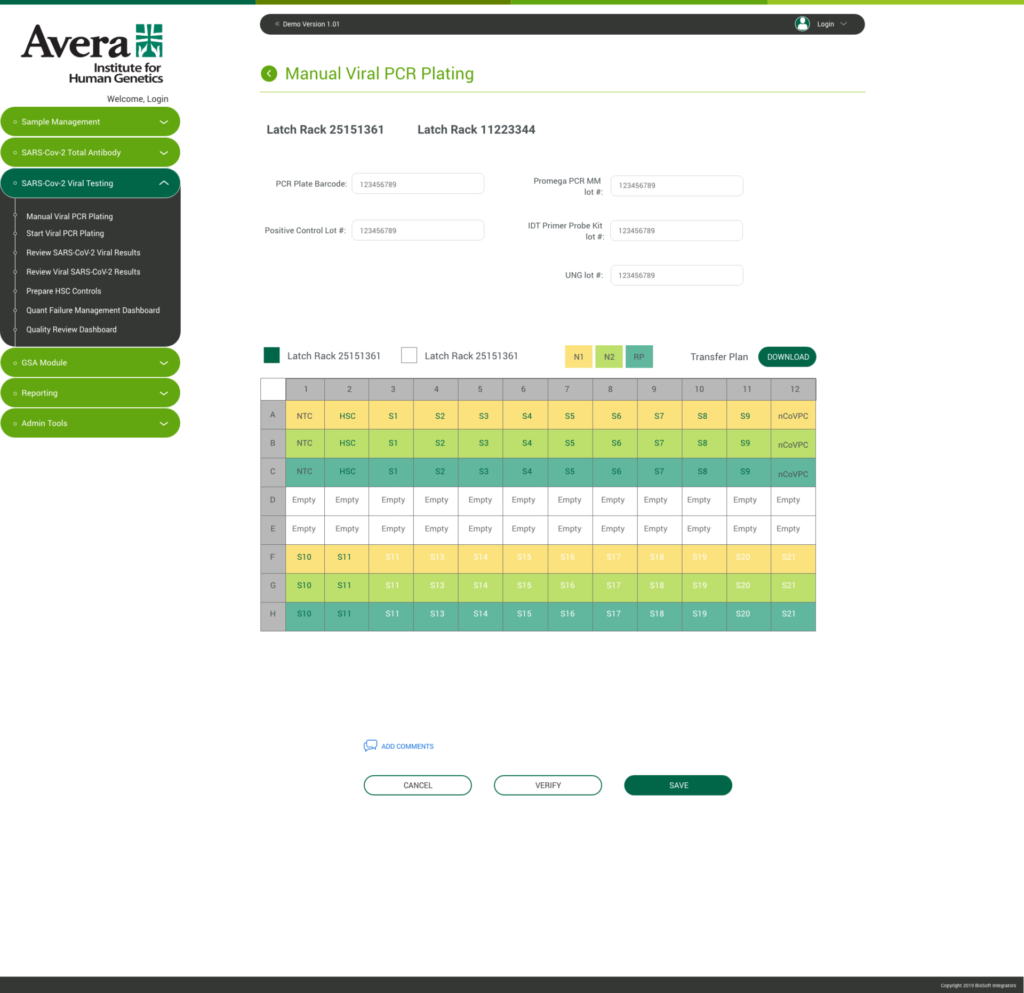
To achieve this, the UI was designed to act as a direct mirror of the physical laboratory hardware. In the Manual Viral PCR Plating interface, the digital racks directly mapped the physical latch-racks, using stark visual indicators (like white text boxes) to clearly differentiate empty slots from loaded ones.
Furthermore, the interface was heavily integrated with physical barcode scanners and the underlying Inventory Management database. If a technician scanned an incorrect plate, or attempted to place a sample in the wrong slot, the system cross-referenced the hardware data in real-time and hard-blocked the action with an immediate error prompt. By removing manual data entry (relying on scanners 90% of the time), we virtually eliminated human input errors.
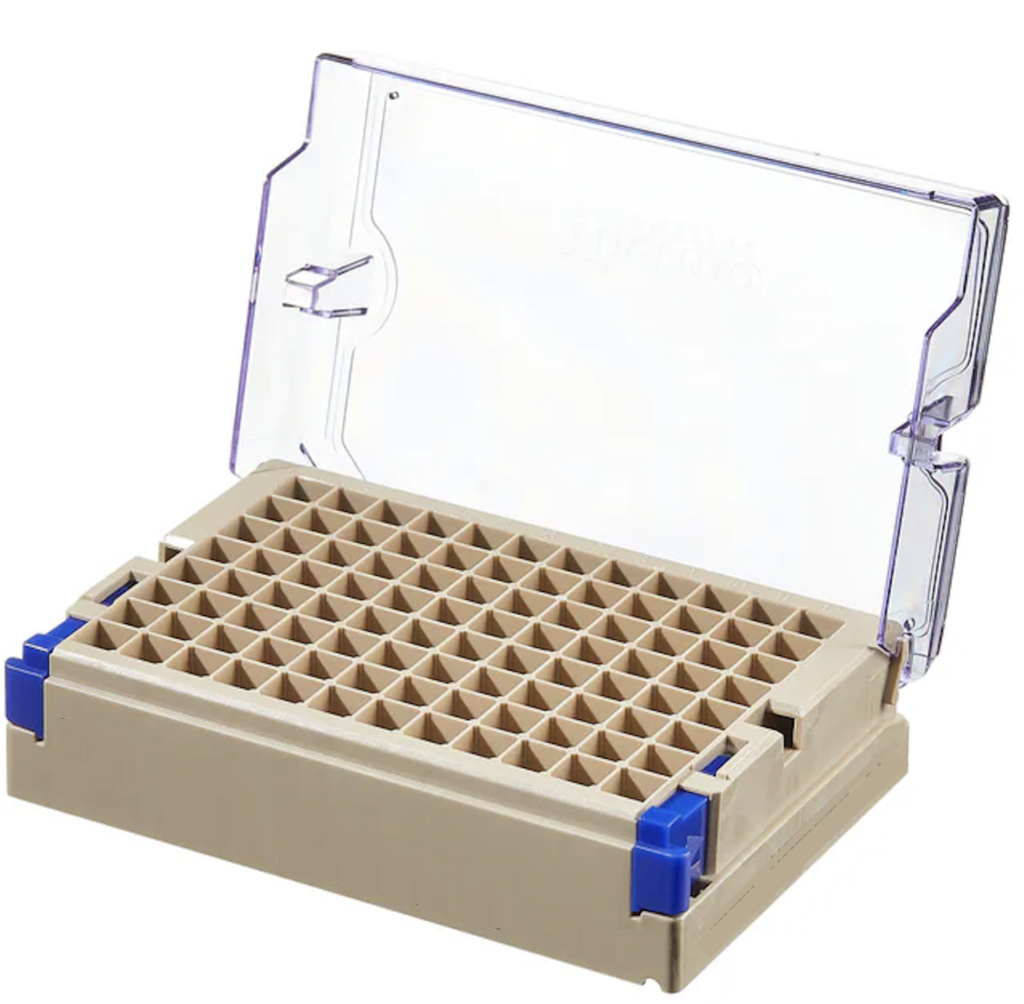
Visual reference: A physical 96-well PCR plate shown for direct comparison with the digital UI layout.
Data Visualization Trade-offs
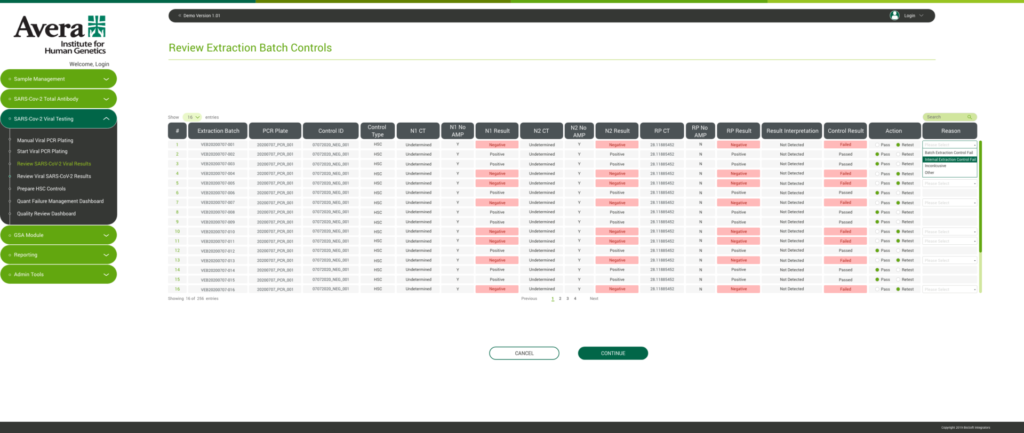
Designing for complex medical data often requires strict minimalism, but stakeholder requirements for the Quality Review Dashboard demanded a highly differentiated visual approach.
To enable laboratory managers to read and interpret critical data sets at a glance, a broad and vibrant color palette was implemented. As a strategic trade-off, I isolated this expansive color usage strictly to the review dashboards where rapid visual scanning of distinct data points was necessary. The operational, day-to-day task screens remained visually quiet and monochromatic to prevent eye fatigue among technicians working long shifts.
The Impact
The «Outbreak» module was successfully deployed within the 6-week window. By focusing on hardware integration, defensive design, and extreme usability, the interface enabled lab technicians to process thousands of samples with near-zero software-induced errors.
This rapid deployment directly supported Avera’s critical scale-up during the peak of the 2020 crisis, coinciding with the laboratory’s capacity expansion and their successful acquisition of an FDA Emergency Use Authorization (EUA) for their RT-PCR SARS-CoV-2 diagnostic panel.